Pictures
|
Pictures
|
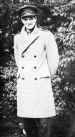
Captain Christopher Gerald Lea
Unit : Lancashire Fusiliers, attached to X Troop, 11th Special Air Service Battalion
Army No. : 73126
Awards : Military Cross
Christopher Lea was interviewed for the Channel 4 television programme, Commandos, broadcast in February 2002. The fourth episode, A Leap in the Dark, described the formation of No.2 Commando / 11th SAS, and Operations Colossus and Biting; the Bruneval Raid. The following is a transcript of his contributions:
Regarding his experience of parachute training: "I would have jumped out without a parachute. With all those eyes watching me there was no way that I would not have jumped. I remember describing it as if a bottle of champagne had been opened inside one. It was a wonderful thing. Never to be repeated once we'd done it once. Everybody experimented with their own forms of landing. There was indeed an occasion when I saw Tony [Lieutenant Deane-Drummond] come down, no fault of his, there was quite a lot of wind, came down kind of diagonally, as he was, on the swing, and ploughed a neat furrow with his nose through Tatton Park."
When Lieutenant-Colonel Jackson asked for volunteers for Operation Colossus: "He said there is an operation being planned. I can't remember his actual words but they were on the lines that it's an operation from which the people who take part in it may not return. And so to this volunteer force he said "Would anybody who would volunteer for this take two paces forward". Well needless to say the entire parade was nearly two paces closer to him after that."
Regarding the final inspection by Admiral Sir Roger Keyes on the 7th February 1941, shortly before "X" Troop left for Malta: "He saluted us. Well we didn't know what to do and so rather [?] and unmilitary we all raise our hands and saluted him. It was quite an emotional moment for a time. I think he had perhaps a better understanding of our likely fate than we had."
When the aqueduct was demolished: "It was great. We had done what we came for."
Of the march to the coast: "It wasn't planned, it wasn't organised. Nobody really thought about the difficulties of getting away, and it turned out to be Mission Impossible. It was just at a time when the snow was melting and everything was sodden. If you tried to climb up the hill you slipped back again. It was very very hard going. I decided that if we were going to have any chance of getting to this rendezvous in time that we'd really got to go on the road, there was no way we were going to do it at the speed we were going. So we managed to get onto the road, very quickly got into the swing of it, to walk on tarmac again was wonderful and so we made several kilometres quite successfully, came to an obvious bridge. I walked across with my pistol in my hand - everything was absolutely quiet. I did have a sort of feeling that it was too quiet, but there it was. I waved the rest of them on, at which they came across and then suddenly there we were pinned by a mob of people. Carabinieri, civilians, women, both behind us and in front of us, and we were absolutely neatly ambushed. I can seldom remember a more ghastly moment in my life. I had recruited these people, there we were, we were making for a rendezvous. We had failed. These two lance corporals came up, and Harry Pexton was one of them, and they sat each side of me and Harry Pexton said "We think you made the right decision sir" and then they sat beside me a bit longer and then made some excuse to go back, and that made a lot of difference. I've always remembered that."
Of his attempted escape from P.G. 78 with Lieutenant Deane-Drummond: "Tony jumped down, and just as I was jumping this chap fired a shot. What I hadn't calculated on was that they were going to use dum-dum bullets, so I collected about five different pieces of metal in me which went through either a main vein or an artery, I don't know which, I couldn't move."
Lieutenant Deane-Drummond, interviewed for the same programme, added: "He didn't say a word, because I think if I'd known that I would have stopped to try and help him."
For his activities as a prisoner of war, Captain Lea was awarded the Military Cross:
Captain Lea was captured near Calitri, Italy, on 12 February 1941. In December of the same year he and another officer made an attempt to leave Sulmona disguised as electricians. They had climbed over the inside wall and had entered the Italian section of the camp when a sentry became suspicious and fired, hitting Captain Lea in the leg. His companion, however, reached Como before he was arrested.
Throughout his captivity Captain Lea participated in numerous tunnel schemes, none of which were successful. He also communicated secretly with the War Office.
After the war Christopher Lea became a judge, and was later a vicar.