Pictures


|
Pictures
|
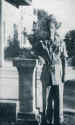
Lance-Corporal Thomas William Huntbach
Unit : No.22 Platoon, "D" Company, 1st Battalion The Royal Ulster Rifles.
Army No. : 14404928
Tony Huntbach joined the 70th (Young Soldiers) Battalion The Kings Regiment in November 1942 and served with them until June 1943, when he was posted to the Regiment's 8th (Liverpool) Battalion. On the 6th June 1944, he landed in the second wave on Juno Beach at H Hour plus 20 minutes, with the Canadian Scottish Regiment. They were a Beach Group and tasked with security of the beach, unloading of supplies and supporting the Canadian Forces as they advanced inland. At the end of June they were disbanded and Tony volunteered for duty with the Airborne Forces.
He was posted to the 1st Battalion The Royal Ulster Rifles whilst they were resting out of the line near Pegasus Bridge. He saw action in the bridgehead area and, in August, took part in Operation Paddle, the advance to the River Risle via Honfleur. Huntbach later served in the Ardennes campaign in January 1945, and was involved in conducting relatives round the town of Bande after some of the townspeople were massacred by German S.S. troops.
Promoted to Lance-Corporal, Huntbach took part in Operation Varsity on the 24th March 1945. "D" Company was tasked with the capture by coup de main of the Bridge over the River Issel near Hamminkeln Railway Station. Huntbach's glider was hit by anti-aircraft fire on the fly-in to their landing zone and he was slightly wounded. Both Nos. 21 and 22 Platoons landed near the bridge and secured it.
When they had dug-in and had set up their defences, they saw a German eight-wheeled heavy armoured car approaching their position, along with some self-propelled artillery. The call went back for the Platoon PIAT man to move forward and engage it. This he did, but in his hurry and excitement he missed and the bomb hit the farmhouse opposite and set it on fire; the armoured car promptly withdrew. Another PIAT operator managed to score a hit on one of the self-propelled guns, and though the damage was minimal it also withdrew.
"By the early afternoon of the 24th things had quietened down at the bridge area and my Platoon Sergeant, Jesse Matthews told me to make my way to the Regimental Aid Post to get my wounds dressed. It was on my way when I passed the railway station and I saw a glider smashed into the railway station building. This was the glider that had carried Major Vickery, the commander of "A" Company, 1st Battalion, The Royal Ulster Rifles. I stayed at the Aid Station until the following day and after the breakout, was evacuated over the Rhine to Venlo. I was then flown to Brussels to the 8th British Military Hopsital".
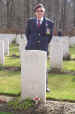
In early 2006 Tony and his good friend Lance Rooke, with their wives, participated in a tour that went from the D-Day beaches to Berlin. Along the route they paid their respects at all of the sites where they had lost so many of their friends. In March 2010 they both attended a tour that took in the sites of Operation Varsity and visited the Commonwealth War Graves Commission Cemetery at the Reichswald where so many of their comrades from the 1st Battalion The Royal Ulster Rifles and other comrades from the 6th Airborne Division lie at rest.
My thanks to Bob Hilton for this account.