Pictures






|
Pictures
|
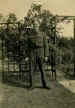
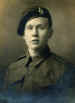
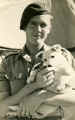
Signalman Thomas Frederick Stevens
Unit : 6th Airborne Divisional Signals.
Army No. : 2599602
Tom Stevens was born 22nd September 1922, and grew up in Tilehurst near Reading, Berkshire. He enlisted on the 2nd October 1941, becoming a Sorting Clerk and Telegraphist before being trained as a Wireless Operator and a Lineman in the Royal Corps of Signals. He was subsequently posted to an anti-aircraft signals unit.
On the 1st June 1942, he was posted to the 1st Airborne Divisional Signals, but was transferred to the newly formed 6th Airborne Divisional Signals on the 14th May 1943. On the 28th March 1944, he was put on the X2 List as a result of hospitalisation, before returning to the Divisional Signals on the 4th April 1944. He was, at some stage during his training, assigned to Headquarters, 6th Airlanding Brigade as a radio operator.
He took part in the Normandy landings on the 6th June 1944, boarding a Horsa glider at either Harwell or Brize Norton, bound for LZ-N near Ranville. It is unknown whether he participated in the first or the second lifts; if the former he would have flown with Divisional Headquarters (chalk numbers 70-89) as an advanced radio operators for Brigadier Kindersley, landing at 03:00 hours. If the latter, he would have accompanied the main lift of 6th Airlanding Brigade Headquarters (chalk numbers 94-108) at 21:00 hours on the evening of D-Day. He served with the Division throughout their campaign in France, and returned to the UK on the 2nd September 1944.
Following a period of rest and retraining, he returned to the continent with the 6th Airborne Division on the 23rd December 1944, bound for the Ardennes. At the conclusion of this campaign the Division returned to the UK to prepare for the Rhine Crossing, but Stevens stayed behind with the Ground Element, who were initially occupied holding a section of the line along the Dutch frontier, until the time came to prepare for a link-up with the Division when they landed.
The 6th Airborne Division dropped across the Rhine on the 24th March 1945, and after the Ground Element had effected a link-up, Stevens served with them throughout the duration of the campaign in Germany, returning to the UK on the 22nd May 1945.
He continued to serve with the 6th Airborne Divisional Signals after the war, embarking for Palestine on the 4th October 1945. On the 15th April 1946, he was transferred to the Signals Section of the 31st Infantry Brigade, and on the 6th October returned to the UK where he was discharged from Army service. On the 7th October 1948, he was sent his Testimonial which described his conduct as GOOD, and his officer wrote of him; "Very pleasant, always tidy and keen at his work. Is very keen to better himself".
The following post-war information came from a work colleague, Brian Sanders who worked with Tom at the Exchequer and Audit Department of the Civil Service:
After being discharged from the Army in 1946, Tom returned to the GPO and continued his Sorting Office and telegraphist duties. Whilst there, during some of his spare time, he studied law, bookkeeping and auditing to progress within the Civil Service.
In the late 1940s Tom left the GPO and transferred to the Land Board. He left there and joined the Exchequer and Audit Department in the rank of Assistant Auditor on 1st July 1950. He was assigned to the audit of the Post Office at GPO Headquarters, London EC1. This was followed by the audit of the Ministry Of Transport at Berkeley Square, London from 1953 to 1958, and then a three year posting based on Singapore to audit the Army and RAF in various locations in the Far East including periods at Hong Kong.
His wife Ellen, daughter Helen and her brothers Tony and Keith went with him to Singapore and their lifestyle there was one to be envied with staff to help in the house and garden; the gardener, with the magnificent name of Vas Vellingham (alias Vassy) was a superb badminton player who could stand at one end all day and return anything and everything shied at him. There were also visits most days to the glorious Old Singapore Swimming Club, with the children soon becoming very strong swimmers.
On return to the UK Tom's further postings in the Exchequer and Audit Department included the Crown Estates at Bracknell and the AWRE at Aldermaston.
He had suffered with a weak chest for several years and had bouts of bronchitis. He eventually transferred to a "lower position" in Her Majesty's Customs and Excise in order to remain in the Reading area rather than doing a lot of travelling. If he had remained as an Auditor, he would have had to go and work at some stage with the Exchequer and Audit Department in London and he felt the commute would not be good for his health. His move to the Customs and Excise was a smooth transition and based locally in the Reading area.
He retired at age 60 from the Civil Service but due to a wrong diagnosis of Lung Cancer (he was told he had Tuberculosis from his time in Singapore in error) he died at just age 66 from Lung Cancer. He smoked a pipe though he was not a heavy smoker but his weak chest could have impacted on the disease.
Tom was indeed a character and could always tell a good story and had a very philosophical view on life.
Tom Stevens died in 1988.
Main source of information: Helen Ewers, daughter of Tom Stevens.
My thanks to Bob Hilton for this account.