Pictures
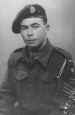
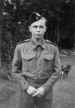

|
Pictures
|
Sergeant Stanley Nelson Higginson
Unit : No.13 Platoon, "B" Company, 12th Battalion The Devonshire Regiment.
Army No. : 5622099
Sergeant Wilson was killed shortly after landing on the 24th March 1945. The following was reported in local newspapers:
Killed By Sniper - Sergt. Stanley Higginson
Sergt Stanley Nelson Higginson, of the Devonshire Regiment, second son of Mr and Mrs. C. Higginson, of Burghley Place, Cranmer Road, Mitcham has been killed in action while on active service with the 6th Airborne Division in Western Europe.
He was caught by a sniper's bullet on March 24 and died immediately, an officer of his platoon told his parents in a letter received at the week-end.
"While unloading, after landing with the glider, we came under fire from snipers in the area." the writer continued. "'Higgy', as we knew him, is greatly missed by us all."
Sergt. Higginson's popularity in the Army was comparable with his popularity at home. he was a single man, 26 years of age, and blessed with a cheerful quality of mind and heart that endeared him to all he met. Two brothers are like him in that respect. All three of them before the war were craftsmen employed on the building estate of the later Sir Isaac Wilson, the manager of which is their father. A good deal of Wilson Hospital, Mitcham Garden Village and Cumberland House Hospital, Sir Isaac's gifts to the borough, was the work of Mr. C. Higginson.
Sergt. Higginson, like his brothers, was educated at Western Road Central School under the head masterage of the late Mr Canning. And, [like] his brothers and only sister, he was an enthusiastic ice skater. He joined the Army on Sept. 14 1939, and took "stripes" in quick time. For a period he was a sergeant-instructor. Joining the Airborne Troops, although he had a place on the permanent staff, he was one of the invading force on D-Day. It was not long before he was offered a commission. That was immediately after all his immediate superior officers had been killed in one action and he took charge: but he preferred to remain Sergt. Higginson.
In September last he returned to England. "We were expecting him to come home for his Christmas dinner." Mrs. Higginson told "The Advertiser" reporter. "He did not arrive. Shortly after we had a letter from him. He was on the Western Front again, called suddenly to action against Runstedt's bulge. He told us that his Christmas dinner was a chunk of bread and no turkey. 'I was one of the unlucky ones with the bird,' he added. 'There was no enough to go round.' After that he went to Holland. He was home again in February. That was the last we saw of him."
Sergt. Higginson had a narrow escape from a sniper's bullet a few months before he was killed. He was carrying a can of tea when a bullet [? ? ?] out of his hand.
Widespread sympathy is felt for the family, one of the best known and most [?] in the borough. Sapper Charles Higginson, of 5, Thirsk Road, Gorringe Park, a married son, who has played cricket on the Green, is on the Western Front. The only daughter was formerly an ambulance driver at Mitcham Court Headquarters.
The second article reads:
Killed by a Sniper - Fate of Sgt. S. Higginson
News has been received that Sergt. Stanley Nelson Higginson (aged 26), second son of Mr. and Mrs. C. Higginson, Burghley-place, Cranmer-road, Mitcham, has been killed in action in Western Europe while serving with the 6th Airborne Division.
Sergt. Higginson's officer, writing to his parents, says: "While unloading for landing, we came under fire from snipers in the area. Your son was hit, and died immediately. 'Higgy', as we knew him, is greatly missed by us all."
With his two brothers, both of whom are serving, Sergt. Higginson was educated at Western-road School. In September 1939, he joined up, and was a sergeant instructor in this country until he applied for active service.
He went to France on D-Day, and soon afterwards was in an action in which all his superior officers were killed. Sergt. Higginson carried on, and later was offered a commission, but declined.
He and his brothers, and sister, an ambulance driver at Mitcham Court, were all keen ice skaters before the war. All the boys worked for their father, who for many years managed the building estate of the late Sir Isaac Wilson.