Pictures
|
Pictures
|
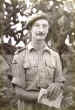
Brigadier Charles Hilary Vaughan Pritchard
Unit : Brigade Headquarters, 2nd Independent Parachute Brigade Group
Army No. : 38573
Awards : Distinguished Service Order, Commander of the Royal Order of King George I with Swords.
Brigadier Pritchard was born in 1905, and was educated at Sherborne and Trinity Hall, Cambridge, before joining the Royal Welch Fusiliers in 1927. On the 12th March 1931, he represented the Army in the heavyweight category at the Services Boxing Championships at Henlow Camp, and was beaten by the holder of the title, Lieutenant E. H. Gregson of the Royal Navy.
From 1931-32, he served as Aide-de-Camp to the Governor and Commander-in-Chief Gibraltar, and prior to the Second World War was Adjutant of the Royal Welch Fusiliers Depot, and subsequently attended Staff College at Camberley, before becoming the Adjutant of the 53rd (Welsh) Infantry Division. In August 1942, he was commanding the 10th Battalion The Royal Welch Fusiliers when it was converted to the airborne role and became the 6th (Royal Welch) Parachute Battalion. Pritchard left the 6th Battalion whilst in North Africa in May 1943, to become the Deputy Commander of the 2nd Parachute Brigade. He took full command of the Brigade in Italy during September 1943, after Brigadier Down left to take temporary command of the 1st Airborne Division following the death of Major-General Hopkinson. The Division returned to the UK at the end of the year, but the 2nd Parachute Brigade remained in Italy and served on the front line almost continuously for the next six months.
On the 15th August 1944, the 2nd Parachute Brigade took part in Operation Dragoon, the invasion of Southern France, as part of the 1st Airborne Task Force. Pritchard flew in a C-47, chalk no.37, and jumped from a height of 500 feet at 05:00, landing within 30 metres of the Eureka beacon set up on DZ-O by the 1st Independent Parachute Squadron. He wrote: "The whole experience was exceedingly interesting. We left Rome on a lovely night. You can imagine circling round, getting into formation, one airborne division. All the aircraft had their lights on, and Rome was twinkling below. 40% of the 4th Battalion and 60% of the 6th Battalion landed on the correct zone. It was the 5th Battalion that went astray. They were to be dropped on a signal from the leading aircraft, and when in the air its occupants noted with some curiosity that the crew chief was using a screwdriver on the lights. It transpired that these had failed, and the jump had to be signalled by flashlight".
Having returned to Italy, the Brigade was sent to Greece in October 1944, and at the end of the year became embroiled in very heavy fighting against Greek Communists in Athens. Pritchard was awarded the Distinguished Service Order for his actions there, and also received the prestigious Greek medal, the Commander of the Royal Order of King George I with Swords, by His Majesty The King of the Hellenes. This was announced in the London Gazette 16th January 1948, and the citation is as follows:
He served as commander of the first landing 68 parties for the liberation of Salonica. Through his untiring and continuous efforts he offered our country invaluable aid in the task of establishing order in the first days of liberation. He furthermore laid the foundation for the reorganization of the Greek Authorities in the town.
In late 1945, the 2nd Parachute Brigade became a part of the 6th Airborne Division in Palestine. Pritchard left the Brigade in 1946, and from then until 1948 he served as Commander Airborne Establishments. He retired from the Army in 1949, becoming a D.L. and Justice of the Peace for Merioneth, and also High Sheriff of Merioneth from 1955-58. He married Mary Patricia Monck, younger sister of the 6th Viscount Monck, on the 28th November 1935 and they had four daughters. In 1956, Pritchard inherited the Nannau estates in North Wales from his uncle, General Vaughan, and subsequently changed his name by deed poll to Vaughan. He died on the 28th March 1976.
His medals were auctioned in 2009; Distinguished Service Order, George VI, reverse suspender dated 1945, minor damage to centre cypher, 1939-45 Star, Africa Star, Italy Star, Defence Medal, War Medal, General Service Medal 1918, Clasp Palestine 1945-48 (unnamed replacement), mounted on original bar, GVF. The group is complete with the original D.S.O. bestowal scroll, personally signed by King George VI, Brigadier Pritchard's office stamp, bullion wire parachute wings, Parachute Regiment canvas title, Airborne Division printed title, ribbon bars (both pin-on and sew-on), named French Paratroopers breast badge, engraved on the rear "Brigadier C.H.V. Pritchard" with a small metal plaque "Hommage du General A. Demetz et des officiers de la 25e. Div. Aeroporte". The medals were purchased from the estate sale, his Greek Commander of the Order of King George I with Crossed swords was unwittingly split from the group by the auctioneer
and sold separately.
The following is his obituary which appeared in the Pegasus Journal in July 1976.
Brigadier C. H. Vaughan (formerly Pritchard) Brigadier V. W. Barlow Lt-Col David Hunter Members of the 4th, 5th and 6th Battalions and indeed those of the 2nd Independent Parachute Brigade as a whole-will be sad to learn of the deaths of three of their former commanders: Brig C. H. V. Pritchard, Brig Bill Barlow and Lt-Col David Hunter.
The first of these raised the 6th Battalion from a combination of the 10th and 11th Battalions, Royal Welch Fusiliers. The number of volunteers from these two units was so great as to cause the King to agree that the title of the new unit should include the words "Royal Welch". The then Lt-Col Pritchard, a regular Royal Welch Fusilier, threw himself completely into transformation to the parachute role; and there can be few if any of those who served in the early days at Newcome Lines, Larkhill, who were not galvanised by his energy and enthusiasm. Outspoken in his criticism of his officers and soldiers, he earned the respect of them all by the high professional standards he set and kept personally.
When deputy brigade commanders were appointed in 1943, he was chosen for that role in 2nd Brigade and inevitably succeeded as brigade commander when Gen Down was promoted to command 1st Airborne Division. With the division's departure from Italy in the autumn of 1943, Brig Pritchard became the C-in-C's airborne adviser as well as his airborne force commander. Knowing well the capability of his soldiers, he offered to remain in the winter line for a prolonged period to ease the roulement of other formations and thrice the brigade relieved complete divisions. In almost six and a half months, 2nd Independent Parachute Brigade enjoyed only nine days in total out of the line.
Meantime, at the end of the Sicily phase of operations David Hunter had taken over the 5th (Scottish). The vacancy arose when Charles MacKenzie left for divisional headquarters. David Hunter came from the post of brigade major of the 1st Parachute Brigade and had by that time won an MC in course of acquiring a good deal of operational experience. Despite early service in the Liverpool Scottish, he was to all intents and appearances an Englishman and an outsider. He was also something of a whiz-kid, full of energy and new ideas. It took some time before the Battalion as a whole were ready to acknowledge him as their own. His high capabilities from the moment of entering operations broke all final barriers, however. As it happened, he commanded the Battalion throughout its entire period of active operations in the war.
Bill Barlow was brought to command the 6th Battalion in the latter part of 1943 from the 4th Brigade, after the Abdiel disaster. A regular officer of the KSLI, a noted amateur steeplechase rider before the war, his coolness under fire, his practical, common sense ways and quiet humour quickly won the affection of the Royal Welch. There was no happier Battalion in airborne forces and this condition stemmed from Bill Barlow.
These three officers, leading their troops through diverse forms of operations, including two airborne operations, seemed men of considerable maturity. By peacetime criteria, they would have been company commanders : Brig Pritchard was 37 on appointment, Barlow 33 and Hunter 29.
At the end of the war, David Hunter returned to a distinguished career with Imperial Chemical Industry's.
Bill Barlow passed to command 1st KSLI in Korea, where his talent as a battle commander was again seen to great advantage. He was later to command a Territorial brigade before retiring.
Brig Pritchard became Commander, Airborne Establishments at Aldershot, responsible for the depot, training battalions and other units maintaining the trained manpower of 1st Airborne Division. He retired in 1949 and succeeded to the estate of his uncle, Gen Vaughan, in the Dolgelly area.
In origin and character all utterly different yet for a time in partnership as commanders of airborne forces, the three pass now finally out of our lives but surely not out of affectionate and for one, at least, grateful memory.
Anthony Farrar-Hockley.