Pictures

|
Pictures
|
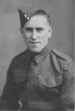
Driver Albert Herbert Charles Bailey
Unit : 253 Company, RASC, 49 Air Despatch Group
Army No. : T/170899
The following was written by Keith Bailey, son of Albert Bailey.
Albert Herbert Charles Bailey was born in Twyford Street off Caledonian Road Islington on 8 November 1919.
Being the only son of Samuel Hiram Bailey and Florence Ann Bailey (nee Bentley) to be born after the end of WW1 (brother Samuel had died aged 2 in 1917, brother Leslie was born in 1916) he was probably named after both his father’s youngest brother Albert, and his father’s brother-in-law Leading Stoker Albert Sala who died in January 1918 when HMS Racoon was lost in a storm off the coast of Donegal while employed on North Atlantic patrol. His mother’s brother Herbert was killed in action in 1917 in Gaza and his father’s brother Charles, died on the Western Front in July 1918.
At some point the family moved from Twyford Street to a council flat in Ritchie House on Hazelville Road and subsequently to 20 Shaftesbury Road. Albert attended Montem School which as a building still exists at the bottom of Hornsey Road.
On leaving school in 1933/4 he worked in a men’s outfitters shop ‘Brent Brothers’ in Seven Sisters Road (on the corner of Eburne Road) Holloway. He later transferred to become a warehouseman in their Denman Street premises behind Piccadilly Circus and later at North Row in Mayfair and on Saturdays he worked in the Holloway Shop.
He was enlisted into the army on 4 April 1940.
We have obtained his service records from the Ministry of Defence, they show his medical and dental records, his trades and his periods of leave. Most interestingly the discharge notes clearly state that he served in Africa for six months (June to December 1943) and that he also served 3 months in Italy, what they don’t say is when he went to Italy, what he was doing there and when he came back to the UK. The same applies to his service in Africa which despite extensive research in both army records, and the official ‘History of The Royal Army Service Corps’ no explanation has ever been found. The only thing we do know is that he spent time in Taranto in Southern Italy. The lives of Officers in the British Army is in the most part well documented in war diaries and official reports, the day to day lives of individual privates is not so well documented, with their names rarely listed.
On enlistment he was posted to a number of training and intake locations before being permanently posted to the Royal Army Service Corps (RASC) 253 Airborne (Composite) Company as private T/170899 and sent off to the 4th (Driver) Training Centre. He was subsequently upgraded to a Driver Mechanic on 11 December 1941. As a driver mechanic you were also expected to repair the truck if it broke down, which apparently it did with monotonous regularity not helped by a shortage of spare parts.
His role was to ferry supplies from depots around the country and deliver them to army camps or to airfields and docks, good work for a warehouseman. One of the more diverse roles undertaken was that RASC drivers also performed the role of Air Despatcher, after delivering their supplies to airfields and loading them on to an RAF Stirling or Dakota, they would then fly with the aircraft and push the supplies out on fixed-line parachutes when instructed by the pilot or navigator. It seems possible that he was involved in taking supplies to Africa in support of El Alamein and to Italy in support of the raids on Monte Cassino in early 1944.
The RASC carried food, medical supplies, fuel, and virtually everything needed to supply an army on the ground. They also carried ammunition and arms in the aircraft but not on the roads as this was the responsibility of the Royal Army Ordnance Corps, consequently at take-off with ordnance and ammunition all packed in panniers the whole aircraft became a flying bomb.
In September 1944, 253 Airborne (Composite) Company RASC was working under the directions of Colonel S. W. Walsh operating a forward supply depot located at the Piggeries in Poulton near Cirencester, Gloucestershire from where they would ferry supplies by truck to Fairford Airfield nearby. The supplies were loaded into panniers each weighing up to 500lb (226kg).
After loading the aircraft the RASC men would fly with it to the Drop-Zone (DZ) to push (or more likely kick) the panniers out the door from about 1000ft (300m) from where they would drop on parachutes or even free-fall into the landing zone.
On 17th September 1944 the Allies launched Operation Market Garden which would require a huge airborne re-supply effort - at that time the largest ever mounted. We have no official record of how many flights Albert undertook over the area, although ten has been stated by him, one military researcher I spoke with in about 2001, the late Brigadier Frank Steer – author of ‘Arnhem – The Fight to Sustain’ dismissed that figure telling me that ‘nobody did ten’ every other single fact in Albert’s accounts has been checked and verified from official records - so why would he lie?
On Thursday 21 September Albert along with Air Despatcher K WOODS drove supplies to Fairford to load on an aircraft destined for Arnhem. What was in the panniers we don’t know but ammunition seems a possibility given the comments made in his own account. The supplies were loaded into a Short Stirling Bomber of RAF 190 Squadron Registration LJ 916 which took off at about 12.00pm, one of 21 Stirlings that took off from Fairford. 21 more went from Keevil and 21 from Harwell. 21 Dakotas went from Down Ampney and another 25 from Blakehill. 5 Stirlings from Blakehill did not take off due to ‘unsuitability of load’ [whatever that means].
One problem with Stirlings was that due to severe space restrictions they only had room for two Air Despatchers whereas the Dakota carried four. The panniers were heavy and once they had started to exit the plane nothing could stop them, so it became a matter of life and death to the despatchers to make sure they were properly harnessed in to avoid going out with the panniers. Even harnessed; if you fell out of a plane going at about 185mph by only a few feet there was no conceivable way of getting back inside with only one other person who may have been able to help. There are no surviving Short Stirlings anywhere in the world either flying or as static exhibits, in 1945 they were all returned to Aldegrove (Belfast) and scrapped, including a number of new ones that had never seen operational service. The only thing we know is that the RAF Museum store in Staffordshire has a chunk of fuselage recovered from a mountain in Scotland about 50 years ago. It is too small a section to give any real feeling as to the space these men had to work in.
It is common knowledge (as we all know from the film ‘A Bridge Too Far’) that due to heavy fighting and massive resistance the Allies had failed to take and advance beyond the bridge over the Lower Rhine at Arnhem as predicted. The RAF pilots had been told to drop their supplies exactly as instructed and to ignore any signals or communications from the ground, as this could be German forces attempting to mislead and gain possession of valuable equipment, food and ammunition. This led to much hostility and derision being directed at the aircraft from the allied forces on the ground who could see the much needed supplies dropping straight into German held territory. They signalled that the panniers were being dropped in the wrong location but sticking to their orders the aircrews ignored what messages they received from the ground, a failing communications system contributed to the chaos. This was also a disaster for the aircrews who thought they were flying over British occupied territory whereas under them on the ground were German Panzers.
LJ 916 made its way east departing the Suffolk coast at Orford Ness, Albert flying over an area that was to become his retirement home some forty years later, over the North Sea and Belgium, then along the ‘air corridor’ towards Arnhem. Disaster struck when it was hit by flak, a very dangerous situation if, it was carrying ammunition and fuel. To add to its woes two German fighter aircraft appeared and fired at it, hitting the two port engines and setting them alight. The aircraft was now crippled but managed to fly on enough to drop its supplies to the ever grateful Germans. Immediately it had dropped its load it started to turn to starboard and head for home or at least to be far enough West to be in Allied held territory, however it quickly became apparent that the only direction for LJ916 was down, the pilot made an emergency belly landing.
Until now; where it came down has been a mystery but wherever it was it was too far from Dutch partisans being able to help the injured crew. Official records show ‘East of Tilburg’. The pilot tried to set fire to the aircraft but this failed due to his injuries and the close proximity of German troops who took the whole crew prisoners of war.
We must not forget the stress this would have also placed his family under, his Father had died suddenly in 1942 from a heart attack and his Mother had to live with the burden of knowing he had not returned from a mission on 21 September, but had no confirmation as to whether he was dead or alive until his arrival at Stalag XIIA was confirmed on 14 October.
In February 1945 while being held captive in Stalag 4A Hohnstein Workcamp he was sent into the City of Dresden about 17 miles away following the air attacks on the city with other POWs and ordered to clear the streets of debris, bodies and body parts of men women and children who would be loaded on handcarts and taken for burial in mass graves dug by other POWs. Albert’s account ties in with a passage in David Irvings book ‘The Destruction of Dresden’
The Crew of LJ 916
Pilot Pilot Officer J S HAY
Navigator Flight Sergeant C I DUNCAN
Flight Engineer Sergeant H J LOWE
Wireless Operator Flying Officer E J CLAGUE
Bomb Aimer Flight Sergeant J (Jack) POVEY
Rear Gunner Flight Sergeant A G WEST
253 RASC Air Despatchers Albert H C Bailey, K Woods
What became of LJ 916? In the 2019 update of the book ‘Green On’ Arie Jan Van Hees states that the location of the aircraft remains a mystery and that efforts to locate it are on-going.
In the book ‘The Royal Air Force at Arnhem’ it simply states that little is known about what happened, it is assumed it was shot down but ‘information about the air despatchers is not known’. Maybe as they were not RAF personnel their contributions were not recognised.
Until a few years ago it was thought that the wreckage of LJ916 was simply bulldozed into a hole, buried and now lay under the floor of the Philips Electrical plant at Eindhoven.
A Dutch aviation archaeologist Adrian Zantvoort has been looking for LJ916 for a number of years because it seems to be the only Market Garden aircraft that’s location had never been determined. He has been in contact with Elizabeth Povey (Bomb Aimer Jack Povey’s stepdaughter) in an attempt to find out what happened to it. It now seems that the aircraft came down near the village of Vessem about 8 miles west of Eindhoven. A farmer was building a shed and while digging the foundations found buried aircraft remains. The area was subsequently searched by the Dutch Police and army bomb disposal experts to ensure that no live ammunition was present - nothing untoward was found.
Further investigations uncovered three pictures from a local press article which told of a Stirling crashing near Vessem. One of the pictures shows a young woman sitting on the aircraft’s nose section. It was believed in 2012 that she was still alive but efforts to trace her were unsuccessful. The article further reveals that once the area was safe from enemy action, salvage crews arrived and removed the fuselage by transporter, probably to be broken up for scrap and spares. One of the pictures shows the crew on their arrival. What the farmer found was probably just the smaller parts that were of no consequence or use to anyone and were simply left on the ground. Unfortunately the quality of the pictures is poor because they are scanned from an old newspaper, attempts are underway to try and find the original photos. It has also now been determined that the aircraft that crashed in the Philips plant was a C47 Dakota and not a Stirling.
It is believed that Elizabeth Povey has possession of her step-fathers log book but despite a number of attempts she has refused all requests to allow anyone sight of it.
What happened to Albert?
Albert was marched to a dressing station where after being patched up he was sent off, probably with Woods to Stalag XIIA at Limburg about 30 miles to the east in German occupied Netherlands.
The Cost
During the period 17- 25 September 1944 when Operation Market Garden was being supplied from the air, 52 RAF Stirlings and 36 Dakotas never made it back to their home bases. The 52 Stirlings represents a RASC complement of 104 of whom 38 are confirmed as being killed, the other 66 are simply shown in RAF records as ‘no details known’. 7 Stirlings were lost on 21 September alone.
Of the 36 Dakotas that were lost their crew complement of 144 saw 45 killed, the fate of the other 99 is again unknown. Many of the men who survived crash landings suffered horrific burns or terrible injuries. The large majority of casualties were from 253 Company RASC, most are buried in Commonwealth War Graves Cemeteries around Arnhem and Oosterbeck.
In nearly every case we know the precise fate of the RAF aircrews as they are extremely well documented. The records of the army personnel who flew alongside them are almost non-existent. While we know the details of LJ916’s RAF crew we don’t even know the first names of Albert’s companion Private K Woods.
To this day many RASC personnel have never been accounted for, some may have ditched in the North Sea and drowned, many were blown to pieces or burnt beyond recognition but there will always be a number who survived and became casualties of the PoW camps or were killed during the liberation and fighting in early 1945. In this respect Albert was one of the lucky ones.
As a PoW it is known Albert was taken to Stalag 12A Limburg where he was registered on 31 September, he remained there until 20 October when he was moved to Stalag 4A at Mulberg, only remaining there until 6 November. On 7 November the day before his 25th birthday he arrived at Stalag 4A Hohnstein Working camp 17 miles east of Dresden. It is worthy of note that his debrief documents stored in the National Archive record the fact that he was not badly treated by his German guards but was not offered much in the way of medical treatment, maybe he didn’t need much - we will never know.
No documented evidence exists about his time as a PoW apart from an article he wrote for ‘Sixes & Sevens’ a Royal Army Service Corps magazine in about 1945:
My story is one of many which will be told and which will no doubt be told again in the years that lie before us.
It starts on a September’s day in 1944. Our Division was having a tough time at Arnhem and I was lucky – or unlucky as you will – to be among those detailed to get supplies through at any cost. It was to be my 10th drop over this area so I had some idea of what lay before me.
The plane stood ready on the tarmac, we loaded our cargo – not the ideal one for such a mission, as one hit in the right spot and our journey would cease to be necessary. Soon we passed over the coast of Holland flying at 1000 feet. With flack coming up thick and fast, our kite was soon in as good form as a flying colander, then to add to our troubles Jerry fighters took a hand in welcoming us and put paid to both port engines.
With both engines on fire we limped over the target and delivered the cargo. Then it was a case of ‘let’s get down to terra firma’. This in itself was a miracle for as we touched down both engines stopped burning. Our pilot tried to set fire to the plane before Jerry reached and captured us, but the pilot, co-pilot and navigator were all wounded by the Hun.
We began a five mile march to the ‘dressing station’ where I said goodbye to the RAF boys.
Then following ten days spent in cattle trucks, sixty prisoners travelling in a truck with no washing facilities and hardly any food we entered unheralded our first ‘Stalag’. There were three-hundred men in one marquee and we received two blankets a-piece, our bed being straw on the floor. A bath was offered but we had no soap and plain water did little to remove eleven days filth.
Our routine was 6.30am breakfast consisting of three slices of bread and margarine. 11am Soup. 4pm soup. After 4pm we lay down, too weak to stand, this continued for two weeks. Then we moved on to a working camp near Dresden and treatment here was an improvement for those who worked.
I was set to work cleaning up damage caused by American bombing, which at that time was not very heavy. The town itself impressed me very much with its fine architecture, but soon that was to be smashed to dust and ruins.
Every day with practically no exceptions, the RAF used to pay the outskirts of the town a visit, but one night they did not pass over and instead gave us the works – all of them. That night the people of Dresden were kept wide awake and when it was all over we were left wondering how we had come out of it in one piece.
This and subsequent visits by allied air fleets did much to change the face of Dresden, it also changed the mood of the inhabitants towards us. London’s fires were small by comparison with those I saw raging all over Dresden
And we were not allowed into the town for two weeks after this episode.
Needless to say our food became more and more scarce and difficult to come by. Usually it was three slices of bread, half an ounce of sausage, a few spuds and a spoonful of manglewurzel. We did get the occasional Red Cross parcel which helped considerably. For a time we managed to scrounge food from some of the derelict cellars, until one of our number was caught and shot.
Eventually as the armies of America and Russia began to draw close to the city, the Germans began to treat us more like human beings and less like animals. Attacks from the air by both armies made things not too healthy for us as they were no respecters of persons by that time.
At last several of us made a bolt for the American lines but one or two were caught by Russian strafing and did not get there. After several days we made contact with the American forces who did their best to make up for all that our days of captivity had cost us.
In his book ‘The Destruction of Dresden’ researcher David Irving notes the following:-
It was not until the late afternoon of Ash Wednesday, 14th February, that even the troops stationed in the city's barracks were put to work on rescue operations: for army units stationed further away from the city the delay was even longer.
At Konigsbruck, where army units were assembling for action on the Eastern front, the situation in Dresden had still not been realised two days after the attacks. Not the least of the difficulties was that the seat of the fire-storm, and therefore the damage to life and limb, in the city was on the left bank of the Elbe, while Konigsbruck and most other troop concentrations were on the right bank.
But the left bank of the Elbe was designated as the 'home front', while everything east of the river was assigned to the 'rearward army district'. Any initiative for such troop movements had to come from the appropriate authorities. Only on 16th February did the necessary marching orders arrive.
In the case of the Allied prisoners of war based on Dresden, of whom there were over twenty thousand at the time of the attack, the instructions to participate in rescue work came even later.
Although there were over 230 Allied prisoners, for example, in one working detachment: No. 1326 in Dresden-Ubigau, as a result of their narrow escape of 14th February, no further working parties were organised until 21st February, when 150 of the prisoners were ordered by Army District Command IV to march in gangs of 70, 50 and 30 into the city to assist in salvage operations. For a whole week the men were confined to camp.
A prisoner in another camp remarked bitterly that although the area all around them had been badly damaged in the triple blow, their German guards forced them to march right across the city each morning to a site in eastern Dresden; the intention was evidently to 'rub their noses' in the horrors their fellow-countrymen had caused, and to aid the almost completely unsuccessful recruitment of prisoners to join a 'Free British Corps' to fight the Russians on the Eastern front.
Most of the British prisoners worked with a will at rescue and salvage operations. This was indeed an anomalous situation. Many were later to pay for their willingness with their lives, when, after weeks of living on diminishing rations, their rescue operations brought them within reach of intact food stores in wrecked shops and hotels.
Thus an American from a camp in Dresden-Plauen was found with a tin of food in his uniform during a routine search; a young French-Canadian soldier was caught smuggling a looted gammon of ham into the camp in Dresden-Ubigau*. Both were shot by firing-squads.
Both Germans and non-Germans were treated the same way.
A German labourer was found to have secreted between 150 and 180 wedding rings in his pockets in Gruneraerstrasse; he, too, was executed on the spot. In Dresden a state of emergency had 'been declared since February 17th.
On the orders of the Gauleiter [announced De-Freiheitskampf grimly that same day] a number of plunderers and looters were shot yesterday on the spot, immediately after their capture.
Where plunderers are discovered, they must be handed over at once to Party officials or their representatives; Gauleiter Mutschsmann has no intention of allowing any kind of softness in this, his so cruelly tested Gau.
This is a matter for the whole community: he who commits a crime against the community is worthy only of death.
Not only looters were being executed in Dresden, adding to the enormous death-roll of the triple blow. It was ascertained that ‘unscrupulous elements' were increasingly spreading rumours which were both uninformed and unkind.
The rumour-monger serves the interests only of the enemy, and must expect immediate death.
The Gauleiter has decreed that all rumour-mongers are to be shot out of hand; this has already happened in certain cases.
For several days after the triple blow, the streets of the city were strewn with thousands of victims still lying where they had been overcome, in many cases limbs had been torn away; other victims had peaceful expressions on their faces and looked as though they had just fallen asleep. Only the greenish pallor of their skins betrayed that they were no longer alive.
* Dresden Ubigau seems to have been a temporary camp set up on the banks of the River Elbe in Dresden City
The end of Alberts war is best summed up in his own words written in his diary between 7 May and 18 May 1945. In this account the place names in square brackets are the modern day names of the towns which mostly now lie in the Czech Republic but which were in 1945 in German occupied Czechoslovakia.
By May 1945 Russian forces were approaching from the East and the Allies from the west. Dresden found itself in a pinch-point and the German guards began to abandon the camps fleeing west to avoid being caught by the Russians who would show them no mercy whatsoever. Russian minds were still on Stalingrad and the atrocities carried out against Russian prisoners in the death camps. Estimates as to the number of Russians killed in WW2 vary from 7 million to 20 million, the German guards were not keen to be on the receiving end of any retribution and knew if they found allied forces they would get far better treatment than they would at the hands of the Russians
The following is a transcript of the diary Albert kept following his departure from his PoW camp in May 1945. Along with an original copy of the ‘sixes & sevens’ newsletter and a copy of an RASC magazine, they were offered to the Imperial War Museum but were declined. It is pleasing to know that they now reside safely in the Royal Logistics Corp Museum who were glad to give them a permanent home.
Monday 7 May 1945
Tyssa [Tisa] I start this story the evening of the above date when rumours were coming into our camp about the war being over. It was very hard to believe, for in the distance the sound of guns and shelling could be heard - nevertheless it was true. In a very short while after, we were walking around the village of Tyssa [Tisa] free men once again. Sleep that night was little for us all with such a thought as victory at long last.
Tuesday 8 May 1945
This day we were up long before our usual time trying to find out what the next move was going to be for us at this stage. After a while we were informed we were to proceed to the town of Brüx [Most] some 90 kilometres away and we were going by motor vehicles at 9 o’clock. We discarded as much kit as possible so that we should have as much room as possible in a limited space. At 9 o’clock the German authorities refused us the transport so the journey was to be made on foot. We set of in small parties of 60 men and 3 guards. Above, Russian aircraft were still bombing. After marching a few kilometres like this the progress looked as if it was going to be slow so when a halt was called the party broke up into little groups and we made off on our own. My particular group contained four of us and we decided to head for the town of Usti. Things were going well for the first few miles when suddenly Russian planes came over just behind us bombing and straffing causing us much discomfort. We did our best to keep ahead of the planes and had many near escapes from falling cartridge cases. We reached a signpost pointing 6 kilometres to Usti but owing to planes still being in the area we decided to carry on to the town of Teplice some twelve miles away. On arrival on the outskirts of Teplice a local woman informed us that the Russians had not finished fighting. One of them asked us in for a cup of coffee and also gave us some bread. Being able to speak English the occupant informed us that the American troops were not at Brüx but at Komantoe [Chumutov] some miles further on. We stayed for a short while before setting off again to get as far as possible. Our luck changed once again, for the bombing and straffing restarted this time in the town of Teplice. Through the town we carried on, getting behind trees, in doorways and under lorries (which by the way were carrying a never ending stream of evacuees). On the side of the bombed streets the dead and injured lay causing a most horrible sight.
We finally got on to the Brüx road only to find that the Russian tanks had cut the road 5 kilometres away making it impassable. The only thing we could do now was to make back to Teplice and take the road that all the vehicles were taking. Once again we were lucky enough to be able to get through the town safely, which incidentally was still under air attack but to our disappointment that road was cut and the Russians were only a few kilometres away.
By now we were feeling exhausted and being in a circle of Russians we decided to stop in a field and wait for their arrival. By this time the transport was in complete disorganisation and was unable to turn around or move in either direction, their owners were leaving them, some smashing them up, others burning them.
This improved the food situation a great deal for us as food was being left by the ton, we were able to get a good supply of bread, butter, honey, jam, pork and any amount of tinned foods. We then settled down to a good feed and bed for the night, then 12 more of our lads joined us who had done exactly the same as us.
They had suffered the same experience as ourselves, but some of the English lads on this trek had fallen to the Russian bullets and were buried by their comrades at the roadside.
Wednesday 9 May 1945
The scene we saw on the breaking of dawn was a road littered with vehicles of every description and with all sorts of cargoes but all quiet on the front. We learned afterwards that the ceasefire was given in the early hours of the morning.
We then set out to find a lorry which would carry us on our way but we were unsuccessful. A German said he was going to Brüx so we decided to go with him. Altogether there were now 17 of us, all boys from our camp and also one Italian. After travelling a few miles we noticed we were on the road leading to Dresden.
After asking us where we were bound for the German informed us that the Americans were at Chemnitz and that would be quicker than going to Brüx. We covered a few miles when we came across some Russian transport which had blocked the road, so we decided to turn back and take another road.
The German’s driving was giving us a spot of trouble so we put him in the back of the lorry and drove ourselves. Once more we came across a road block, knowing it was hopeless trying to get to Chemnitz we turned around and headed to Teplice once again.
Things started to go wrong with the lorry before we got to Teplice so we decided to put it right before we broke down on us completely. This we were able to do by taking parts from other lorries that had been left abandoned on the road. Setting off once again we headed on towards Teplice and on the road to Brüx. Now everything was proceeding well and we got to the town of Dux [Duchkov] some 12km from Brüx. Here our luck changed for the worse for a Russian NCO demanded our lorry saying he was in need of transport. He told us to get on one of his lorries which would take us to Brüx. After a good deal of hanging around we arrived at the town of Bilina then had to get off , as the lorry was going no further tonight, but was proceeding on to Prague the next morning.
The distance from Dux [Duchkov] to Brux was the same as from Bilina to Brux. Here we decided to stay the night, having plenty of food we found a barn and made ourselves comfortable. We managed to find a POW hospital and were able to get treatment for the feet of those in need, also a cold shower which certainly did us good.
Thursday 10 May 1945
Another day starts and we are a long way from our destination. The sun was scorching hot and our feet pretty sore as we had now covered 50 miles, a good deal of it had been walked. After about 5km had been covered, a Russian halted us and made necessary enquiries as to our nationality. On being informed we were British, he stopped two horses and carts coming along with 4 Germans in, made them get out and us get in. This improved the situation a good deal but it was not possible to get us all on the cart, those with bad feet rode whilst the remainder walked. The Italian was asked to take care of the horses as he had apparently previously worked with and handled horses.
Things were looking up for we soon reached Brüx and well on the way to Komantoe [Chumutov]. We were taking turns riding in the cart when another cart came along containing 4 Frenchmen who offered the remainder who were walking to ride along with them.
We all pulled in a farmyard for the night and after preparing a meal we decided to turn in for the night.
Three of us went into the house to sleep, more for shelter than sleep, for the people were frightened of the Russian but even with our presence in the house it did not stop a Russian officer from paying a visit at night and early morning to carry out their pursuit of women. On the whole we got very little sleep and sat amongst a lot of crying and babbling.
Friday 11 May 1945
Today we set off once again for Carlsbad [Karlovy Vary] where latest information tells us the Americans are. The sun was hotter than the previous day and the horses were tiring fast. After a few miles we stopped for a spot of lunch in a farm. Here we were able to help ourselves to poultry, potatoes and eggs, the people letting us have them, knowing that the Russians would have them otherwise.
We proceeded on until we were about 45km from Carlsbad where we decided to spend the night. We were lucky enough to get the poultry cooked, so for supper that night we had a chicken soup which contained 3 chickens and 1 duck. That night we went to bed feeling very full.
Saturday 12 May 1945
This day found us up early for we had a breakfast to prepare which consisted of porridge, 2 geese, 2 chickens, 1 duck and 1 egg each so we felt very fit afterwards.
Our only trouble today was one of the horses was sick, so we had a talk with the Frenchman (who was staying a few days at this particular place) and came to arrangements that we should take their cart and horses in exchange for ours. Once again we set off on our journey which was becoming slow as it was all uphill and to save tiring the horses we walked them up. Things were hard for us this day so 6km from Carlsbad [Karlovy Vary] we stopped for another night. Here we managed to get 5 more chickens and eggs which we had for supper.
Sunday 13 May 1945
We set off today determined to reach the American lines even if it meant travelling all day and all night. At 10 o’clock we met the first American soldier who gave us instructions to carry on for another 5 miles. It was considerably more than that before we came to a sign “Allied POW Camp” and how glad we were when we disposed of our transport. We were given food and then taken in vehicles to a billet where we awaited further transport to take us to an airfield also a further step towards Blighty.
Monday 14 May 1945
The best morning since we started this trek, for we knew that it was going to be much quicker. We hung around until half past four in the afternoon when transport arrived to take us to the airfield near Nurnberg [Nuremburg] where we arrived at half past eleven. After being cleaned and given food we were able to turn in and rest knowing that once more our trek to happiness was a day nearer.
Tuesday 15 May 1945
This day was the first day that we did not move for we stayed on the airfield waiting for the planes to carry us a further stage of our journey but were unlucky as none arrived. I was lucky enough to get a piece of white bread, the first since I became a POW. So once again we wait for a new day to dawn and so carry on with our journey.
Wednesday 16 May 1945
Today is the day we have been waiting for, planes landed early this morning and took us to Reimes, France where we treated with every possible attention. After a meal we had a bath, were given clean clothing and after being sorted out in groups ready to be taken to another airfield, we saw a picture show and then to rest.
Thursday 17 May 1945
Today we arise early and are looking forward to being in England by dinner time. Vehicles carried us to the airfield where we were soon underway to England. We arrived at Westcott aerodrome where they had a grand turnout waiting for us, tea, sandwiches, cake etc. Afterwards vehicles took us to Aylesbury where we given a meal, we now await the final trek.
Friday 18 May 1945
This is the day when our trek to happiness ends. First we were issued with new kit then necessary papers for 6 weeks leave. A special train conveyed us from Aylesbury to London. From here we all found our own way to our homes. On this day at half past seven I myself came to the end of my journey and also to the end of my trek to happiness.
- End -
He avoids mentioning in his diary that he acquired along the way from a dead German officer a most superb pair of Zeiss binoculars. On arriving in Reimes they were warned they would be searched and that any attempt to take to the UK anything they shouldn’t have would result in punishment and a delayed trip home. Not wanting that fate, he threw the binoculars in a river. Even worse was that at no time after was he ever searched.
Albert’s Army service ended on 27 July 1946 but not before he had damaged the gates of Finsbury Park with an army truck and been ‘admonished’ and fined one pound and six shillings from his pay.
Back on ‘Civvy- Street’
He returned to Brent Bros and began courting 24-y-o widow Peggy Valentine a shop assistant in Lavells Sweetshop & Tobacconists in Holloway. It seems possible that Albert may have been at school with her first husband Henry Valentine as both men were born in November 1919 and both lived in Holloway. Unfortunately all Islington school attendance registers were destroyed during a WW2 bombing raid so we will never know. Henry Valentine while serving with 2nd Royal Ulster Rifles was shot and killed in a German Ambush on 8 June 1944 in Cambes Wood, he lies in the CWGC in Douvres-La-Deliverande outside of Caen. Exact details of his death are unknown the RUR diary simply recording the loss of ‘11 Officers and 182 men’.
Bibliography
Arnhem – The Fight to Sustain, Frank Steer
The Destruction of Dresden, David Irving
Dresden, Frederick Taylor
The Last Escape, John Nichol & Tony Rennel
The Real Lives of Allied Prisoners in WW2, Midge Gillies
Confronting Captivity, Arian Kochaur
The Story of the Royal Army Service Corps Stirlings in Action with the Airborne Forces, Dennis Williams
The Stirling Story, Michael J F Bowyer
The Stirling Bomber, Michael J F Bowyer
Short Stirling, Ron Mackay
The Air Battle for Arnhem, Alan Cooper
Stirling at War, Jonathon Falconer
The Royal Air Force at Arnhem, Luuk Buist (Glider and re-supply missions) Philip Reinders in September 1944) Geert Maassen
Operation Market Garden Role of Honour*, Paul Van Halteren
Green On - A detailed survey of the British parachute re-supply sorties during Operation Market Garden 18-25 September 1944, Arie Jan Van Hees
*Privately Published